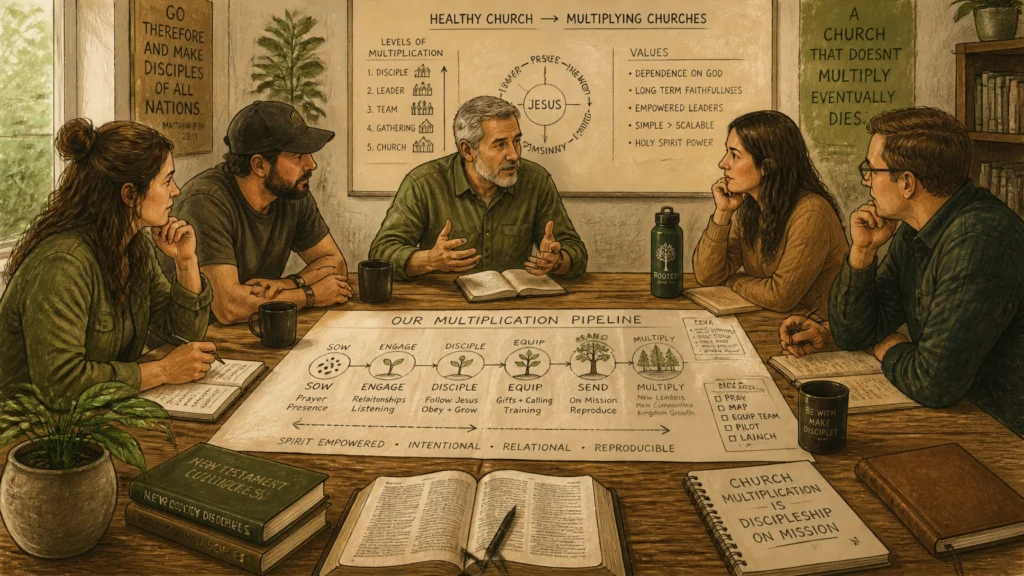
Five-fold ascension gifts…a leadership revolution led by Jesus Christ.
“It was Christ who gave some to be apostles, some to be prophets, some to be evangelists, and some to pastors and teachers for the equipping of the saints….”
Ephesians 4:11-12
We’ve all seen on television or movies the destructive power of water flooding a city like New Orleans when the levees break in a hurricane, or the tsunami in Japan coming like a wall of water clearing nearly everything in its path. Crazy things like houses break apart and float away in swollen rivers, and cars go surfing off roads. Floods carry massive destructive power and move all kinds of things in their wake.
But can you imagine a raging river of LIFE? Can you picture a flood of goodness and mercy filling a city? Can you comprehend a tsunami of salvation? That would be a massive constructive power and also move all kinds of things in their wake.
The nautical phrase “a rising tide lifts all ships” speaks to the universal benefit of the predictable tide coming in. Every ship is lifted, every vessel affected. So the image I have of Ephesians 4 is one of a powerful waterfall, cascading down from heaven to earth. The relentless filling of the pool on earth is like a rising tide that lifts all ships. Everyone in the church and society benefits when the leadership of the church is saturated by Jesus alone. Everything rises or falls on His leadership.
Jesus knew the potency of leadership and spent a great deal of his incarnational ministry investing in the development of leaders. The first group of deeply trained disciples he called apostles.
Sometimes we take this for granted since we are familiar with the language of “the apostle Paul” in much of our preaching and teaching. But step back a second and look with fresh eyes. When Jesus promised to change the world he created apostles. All through Matthew, Mark, Luke and John this work is prominent. And the “Acts of the Apostles” as a sequel to the Gospel of Luke continues the early church pattern. Then most of the New Testament books are written by Paul as an apostle too, speaking to churches planted by the apostle Paul in urban centers, and then by apostles John, Peter and Matthew as well. The New Testament is shaped as prominently by apostles as the Old Testament was by prophets (Moses, Samuel, David, Jeremiah, Ezekial, Daniel, Joel,Zachariah and at least ten more.)
When Paul addresses “leadership” in Ephesians 4 as the gospel pivot point that follows necessarily on the first three chapters of the letter, this picture of leverage and momentum gets its clearest presentation. The five-fold equipping leadership model is imbedded in so much of the New Testament as a whole that it can be assumed to be the operating system that moves all the other parts.
What Jesus began to do on earth he continues to do in heaven. He is the same yesterday and today and forever. The passage in Ephesians 4 has the ascension of Jesus in full view as the gospel hinge of history on display. The implication is clear: the five-fold equipping leadership roles are the post-ascension strategy from heaven. They are for today, while Jesus reigns at the right hand of the Father for the church and over the world, until his second coming.
Unpacking the Five Roles
Let’s look more closely at this text, since surprisingly it is unfamiliar to many people in our churches today (where the pastor-teacher model of leadership has had full sway for decades). The theme of “fullness” in Christ continues all through Ephesians, and coming from chapter 3:19 and 1:23 we now see in chapter 4 the practical plan of HOW God intends to fill the earth with his fullness.
Keeping with Paul’s pattern in both Romans 12 and 1 Corinthians 12, each time he addresses the gifts of the Spirit he does so in a context of a clear message about the supernatural unity of the of the Body of Christ. So Paul begins Ephesians 4 with inspired phrases like: “Make every effort to keep the unity of the Spirit through the bond of peace. There is one body and one Spirit—just as you were called to one hope when you were called—one Lord, one faith, one baptism; one God and Father of all, who is over all and through all and in all.” (vv. 3-6) One implication here: the gifts of the Spirit about to be described are for the good of all who are in Christ. If you are in Christ’s one Body, then these gifts are for your benefit. A rising tide is about to lift all the ships.
In Ephesians 4:7, Paul addresses these gifts of grace and who they come from: “But to each one of us, grace has been given as Christ apportioned it.” The ascended Lord Jesus is actively managing the flow of grace to all parts of His Body. Picture Jesus on the throne in heaven, with a giant reservoir like a “sea of glass clear as crystal” before him. (Rev. 4:6, 15:2; Ez. 1:22) He is seated on a throne with a name: GRACE. And from that position with all authority in heaven and on earth he pours out gifts of grace to his blood-washed saints. As Revelation 22 and Ezekial 47 describe, this river of life as clear as crystal flows out from the throne of God and of the Lamb. It gets deeper as it goes, and gives life wherever it flows. It brings fullness of life! This is a constructive river of God, designed to edify the Body of Christ and then the world around the people of God. The church is not peripheral to the world, but instead the world is peripheral to the church. (Eph. 1:21-23; 3:10)
In Ephesians 4:8-10, the timing of the flow of this river becomes more apparent. Grace-gifts are being given throughout the earth now that the ascension of Jesus has occurred. “This is why it says: ‘When he ascended on high, he led captives in his train and gave gifts to men.’ (What does ‘he ascended’ mean except that he also descended to the lower, earthly regions? He who descended is the very one who ascended higher than all the heavens, in order to fill the whole universe.)” The ascension gifts of Jesus are like the spoils of war distributed at the general’s homecoming to all the citizens of his own city.
Jesus continues and even accelerates this ministry of pouring out these particular gifts of grace on the church after his victory in the ascension described in Ephesians 1:20-23. The intent is to “fill everything in every way” through the church filled by our glorious, resurrected and ascended Jesus. The Body and the Head are aligned deeply in these five-fold gifts of grace and their cascading benefits. Leadership is a rising tide to lift all the ships in the harbor together.
Far from the idea of apostolic or prophetic gifts and roles ceasing after the Old and New Testaments were written, rather the whole sense of this passage is one of ongoing and increasing benefit! Paul writes this theological summary about the purpose and nature of the church to a Gentile population in and around Ephesus about A.D. 60, from a prison in Rome. Ephesus had seen the tsunami of salvation as a city-wide awakening through the gospel documented in Acts 19. Listen to the actual fullness that is aimed for in this passage now describing the five-fold ascension gifts and their purpose: (vv.11-13) “It was Christ who gave some to be apostles, some to be prophets, some to be evangelists, and some to be pastors and teachers, to prepare (equip) God’s people for works of service, so that the body of Christ may be built up until we all reach unity in the faith and in the knowledge of the Son of God and become mature, attaining to the whole measure of the fullness of Christ.”

Equipped By Christ
The need for Christ to continue post-ascension to give all five called and gifted leaders to the Body will be necessary for attaining the whole measure of the fullness of Christ, in Ephesus and in the places we live now. There is hardly anyone I know in North America today who would say the Christian church has reached a high level of unity in the faith, maturity in the knowledge of the Son of God, and the whole measure of the fullness of Christ. So, these ascension gifts from Jesus are as relevant as ever for us today.
Ephesians 4:14-16 goes on to amplify the leadership effect that occurs as these “given leaders” equip the saints effectively in their ministry. The whole Body grows and continually builds itself up in love (healthy and strong) as each part does its work. With over 80% of American churches in decline, it is safe to say we could use a leadership revolution today. We cannot afford to shrink the base of leadership Christ himself wants to pour into the church, or we will see a receding tide lowering all the ships instead.
Have we done that? Is our leadership model about 60% too small? Did we unintentionally drift from the expanding missionary map laid out for us in the New Testament?
If we move from a five-fold to a three-fold or two-fold leadership model, we reduce Christ’s leadership effect on the Body by 40-60%. Why would we ever want to do that?
Are there parts of Jesus we are uncomfortable with and prefer a more democratized church were we have more input and authority? Is our culture creeping in? Let’s be clear: Jesus IS the great apostle and high priest of our faith. All later apostles in the church derive their anointed ability and ministry pattern from Jesus alone. And Jesus IS also the greatest Prophet, the great
Evangelist, the Great Shepherd of the Sheep, the Great Teacher. Every part of the five-fold giftings come from the heart and actual life of Jesus. Any reductionism is deadening, essentially asserting our shrinking thinking toward the Head of the Body. The church does not need less of Jesus, but more! And the channels for that river of life to flow through includes certainly these five Christ-like leadership attributes and roles.
In part one, we explored the ongoing revolution of leadership in the world that flows from the ascended Lord Jesus. He continues to call and send as one of his key ascension activities the equipping leaders of Ephesians 4:11: apostles, prophets, evangelists, shepherds and teachers—to equip God’s people for ministry in the church and in the world until we all reach unity, maturity and fullness in Christ.

We need a lot more of what Jesus actively brings to the leadership of his church today. The first disciples and leaders never forgot Jesus was actually leading them and the Bride he so loved. It was a Person-centered movement for John and Peter and Matthew and Paul…Jesus leading and shaping them based on his actual life and example, and them receiving constant revelation through the Holy Spirit whom the Father and Son had sent to them personally at Pentecost. It was not about good principles or programs or policies. It was a Person they loved and followed daily, and introduced more and more people to that same living relationship.
Jesus has the capacity and ability in his resurrection and ascension to lead the global Christian movement up to this hour. He knows how to lead you and your church. His leadership example is the most loving, innovative, and empowering the world could ever see. Jesus is the founder of his own Kingdom of God gospel movement in all the earth. If from the beginning he led out brilliantly to be our model for ministry as the greatest New Testament apostle, greatest prophet, greatest evangelist, greatest shepherd and greatest teacher…how can the churches today be part of the expanding gospel movement globally if we shrink our actual leadership model?
Leading and developing the church today with 2/5ths or 3/5ths of the horsepower is like driving our cars around in only first gear, and sometimes even in reverse. You can get a little ways driving in a low gear (the engine and transmission do work that way by design), but it is not a fast or safe way to get to Chicago.
The dominant leadership model of the western church for decades (with roots in the Reformation 500 years ago) is the pastor-teacher centric model. Leaders are often installed as “pastors and teachers” of that congregation (even though the text is Eph. 4:11 and includes all five leadership roles from the New Testament.)
My purpose here is not to examine that “problem” more, but to get to the solution side of the equation. Other resources have done incredible depth and breadth of research and teaching on the problem and solution side, most notably The Permanent Revolution by Alan Hirsch and Tim Catchim, 2012. The subtitle says it well: “apostolic imagination and practice for the 21st century church.” While Hirsch and Catchim certainly include a five-fold leadership model and wonderful pictures and graphs in the 305 page book, the focus delves most deeply into restoring the apostolic function to the church today for the sake of gospel movements and Kingdom growth.
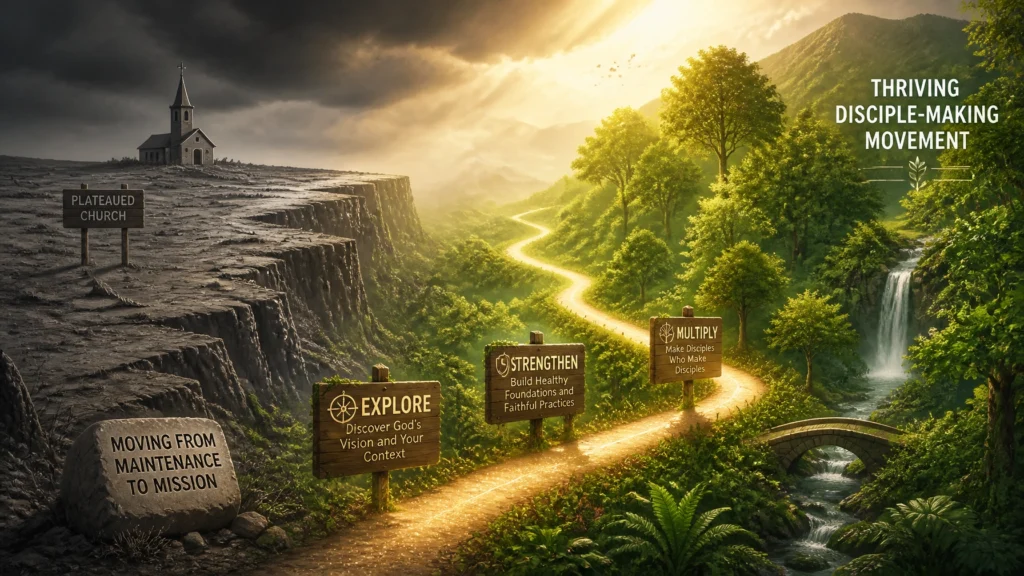
Is that your motivation and experience…gospel multiplication movements and Kingdom growth? I find that those immersed in the practice of starting and growing the church in North America are far more embracing of the five-fold leadership paradigm…the need for apostolic function, the prophetic and the evangelist role is self-evident. But those who have mainly known the church shrinking in their day, or have embraced (even unconsciously) more of the survival/maintenance or addition mentalities about the church in North America, they can struggle sometimes to see the need for “leadership reformation”. Being reformed and ever reforming by the Word of God can land people on opposite sides of that necessary tension instead of on both sides: Either reformed established identity…or…ever reforming (without much concern for recent tradition and context). Better is to be both reformed and ever reforming, with the roots of the Reformation revival going back to Christ, Scripture and the New Testament church for consistent, pure fuel for the flames.
One professor of the New Testament pressed me with a good question about Scripture. He said, “But there is no evidence of a second generation apostle in the New Testament anywhere, right?” I said, “No, the apostle Paul is that evidence, and there are second, third and fourth generation apostles in the New Testament, many more than the original Twelve.” That discussion continued for awhile. Here’s the tricky part for even highly trained scholars in New Testament studies: paradigm blindness. You don’t see what you can’t see, until your mental map gets updated. Some folks are needing a GPS download yet to see the lay of the land clearly.
Let me try a step in that direction. Question: When did the “apostle Paul” become an apostle in the New Testament? Acts 9 at his conversion in Damascus, around 34 A.D? No. It can be precisely known if you are really looking. In Acts 13:1, Luke names five key equipping leaders in the growing, multicultural, urban church in Antioch: Barnabas, Simeon called Niger, Lucius of Cyrene, Manaen, and Saul (Paul). They all are explicitly called prophets and teachers in Antioch. Here’s the text from verse 1-2: “In the church at Antioch there were prophets and teachers….While they were worshiping the Lord and fasting, the Holy Spirit said, ‘Set apart for me Barnabas and Saul for the work to which I have called them.’”

So, Barnabas and Saul are sent off in the power of the Holy Spirit on their first missionary journey, in a pioneering church planting approach to plant the gospel concerning Jesus in unreached territories. This is around 46-48 A.D., twelve or more years since Saul’s conversion. It in on this first missionary journey, in Acts 14:4 and verse 14, that the Word of God says this: “The people of the city (Iconium) were divided; some sided with the Jews, and others with the apostles.” Verse four is clearly referencing the only two missionaries in that city, Barnabas and Saul. Verse 14 is explicit, in Lystra and Derbe: “But when the apostles Barnabas and Paul heard of this, they tore their clothes and rushed out into the crowd….”
So Paul becomes an apostle by the Holy Spirit’s precise inspiration of Scripture about 12 years following his conversion. He was already in another equipping role as a prophet or teacher in Antioch when this expansion of his calling occurred. How did it happen? The Holy Spirit spoke to the leadership group of a potential parent church as they worshipped.
Is that a repeatable process with others then too? Sure. It certainly was true also for the apostle Barnabas. So how many apostles start showing up in Scripture if we are now at 15 already? The original Twelve trained by Jesus, then Matthias replaces Judas in Acts 1, and now two more here? That is an interesting question of how much ongoing ascension work Jesus is seen doing as the Holy Spirit confirms this on earth. We also see prophets like Silas and Agabus emerging after the ascension of Jesus, and Philip the evangelist, who had four daughters who were prophetesses.
But sticking with the emergence of second and third generation apostles, consider this listing below:
Disciples called apostles
Lots cast to replace Judas
Spoke boldly with signs and planting
Sent by church, set apart by Spirit
An imprisoned relative of Paul, called outstanding among the apostles as he writes to the church in Rome his greetings
An imprisoned relative of Paul, called outstanding among the apostles as he writes to the church in Rome his greetings
A feminine name, a woman also called outstanding among the apostles.
Paul in Jerusalem three years after his conversion: “The only other apostle I saw was James, the Lord’s brother.” (CEV) James leads the Jerusalem council in Acts 15 with apostles and elders, writes a book in the New Testament.
“As apostles of Christ we could have been a burden to you…” Paul, Silas and Timothy are all in view as co-senders of this letter.
Same as above, plural emphasis throughout this whole letter. 4:2, they give instructions with authority to the church.
Paul writes about Apollos as a fellow apostle entrusted with this calling…v. 9 “us apostles” (use of the plural throughout). Verse 6 also. Apollos also listed in I Cor. 1:12 alongside Peter and Paul as apostles the church relates to.
Titus is a true, not false, apostle. He does the ongoing work of an apostle in Titus 1:5, establishing new churches with Paul.
Necessary inspired instruction by Paul on how to distinguish between true and false apostles in Corinth, written about 55 A.D. This four chapter presentation is extensive, showing how true apostles suffer more, sacrifice more, serve more, strengthen the churches more, and do signs more. If there are only ever 12 apostles, (or 13 to 15 with Matthias, Paul, Barnabas), why have this whole section of Scripture on how to discern them properly when the Holy Spirit could just say “there are only 12” in one sentence? In 2nd Cor. 11:13 Paul describes a group who are false apostles…masquerading as apostles of Christ. Wisdom and discernment are thus required in this Gentile church over 25 years after the resurrection. Something of great value in the church is being counterfeited by the enemy, targeted in warfare since leadership is so pivotal.
“All are not apostles, are they?” But clearly many still are, as well as prophets and teachers in this list of spiritual gifts. Paul says to every Christian as a member of Christ’s body, “in the church God has appointed first of all apostles, second prophets, third teachers, then workers of miracles, also those having gifts of healing, those with gifts of administration, and those speaking in different kinds of tongues.” (12:28)
All these spiritual gifts and gifted equipping leaders continue in the church then and now. The believers are urged to eagerly desire the greater gifts.
So, in summary:
- First generation, circa 25-28 A.D.: The Twelve, plus Matthias (chosen from among the 72 sent by Jesus in Luke 10 in the same way as the first group of Matthew 10 apostles.)
- Second generation, circa 29-45 A.D: James, Andronicus, Junias, and the other apostles mentioned in I Corinthians 15:7.
- Third generation, circa 46-50 A.D.: Paul, Barnabas, Apollos, Silas.
- Fourth generation, circa 51 A.D. and beyond: Timothy, Titus, other referenced by the 1st and 2nd Corinthians passages above.
The point of this exercise is to urge the idea that the momentum of the gospel in the New Testament “turning the world upside down” cannot be separated from the leadership design built into that movement by Jesus. When all the five-fold equipping leaders are mature and actively equipping the saints for ministry, the river of life gets a lot deeper as it goes.
Thankfully, there are dozens of books now and online assessment tools to help discover and develop the church’s five-fold leadership capacity today. We have opportunity for the tide to come in our churches and lift all the ships. https://5qcentral.com/
Finally, let me illustrate the idea of momentum in gospel movements with the physics equation P=MV. (Momentum equals mass times velocity.) Mass and Velocity have a multiplying, exponential relationship to one another. And both of them are made of two parts, so the following four components of a people movement have to be increased to see world-changing momentum generated.
The point of this exercise is to urge the idea that the momentum of the gospel in the New Testament “turning the world upside down” cannot be separated from the leadership design built into that movement by Jesus. When all the five-fold equipping leaders are mature and actively equipping the saints for ministry, the river of life gets a lot deeper as it goes.
Thankfully, there are dozens of books now and online assessment tools to help discover and develop the church’s five-fold leadership capacity today. We have opportunity for the tide to come in our churches and lift all the ships. https://5qcentral.com/
Finally, let me illustrate the idea of momentum in gospel movements with the physics equation P=MV. (Momentum equals mass times velocity.) Mass and Velocity have a multiplying, exponential relationship to one another. And both of them are made of two parts, so the following four components of a people movement have to be increased to see world-changing momentum generated.
M1: Volume—is the quantity of disciples of Jesus and disciple makers growing in your church or ministry?
M2: Density—is the quality of the disciples/disciple makers growing deep and wide in your group?
V1: Alignment—is the direction of your group clear and continually re-focused?
V2: Acceleration—is the speed of obedience and fearless application on the rise?