By Dr. Adam Grill, Founder of Family Network
A church can grow larger without becoming more reproducible.
That distinction matters.
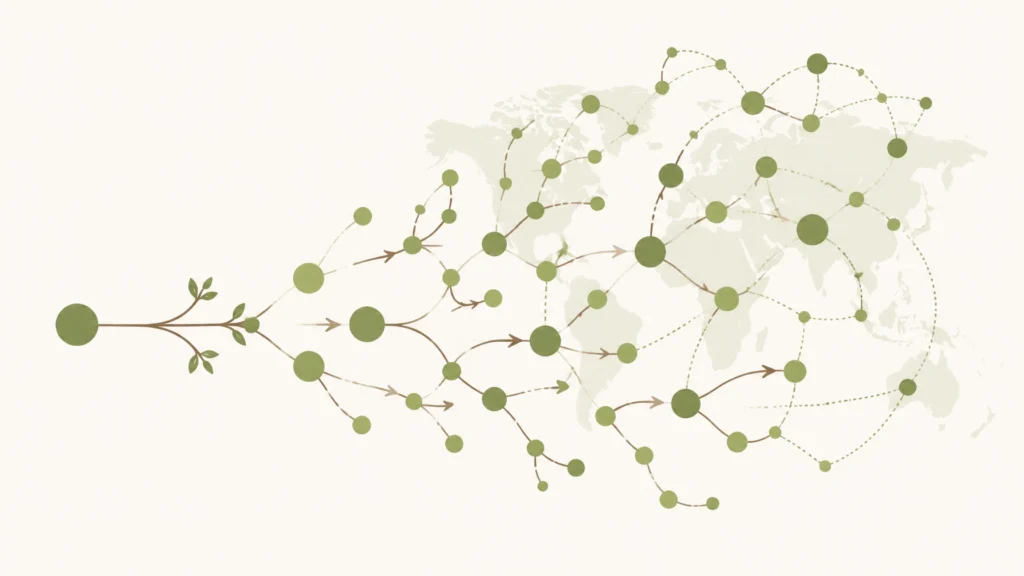
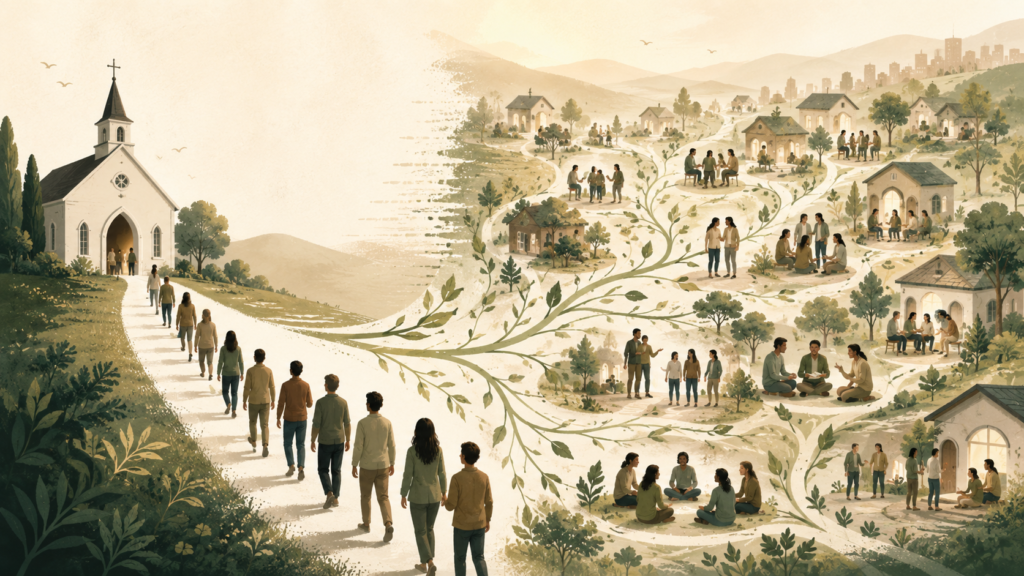
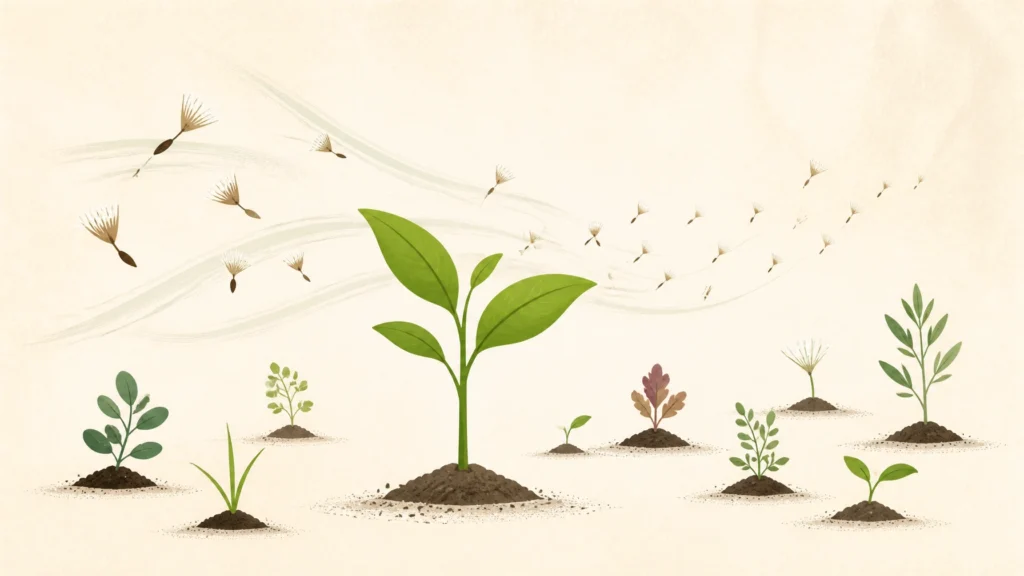
The future of the Church isn’t addition. It’s multiplication.
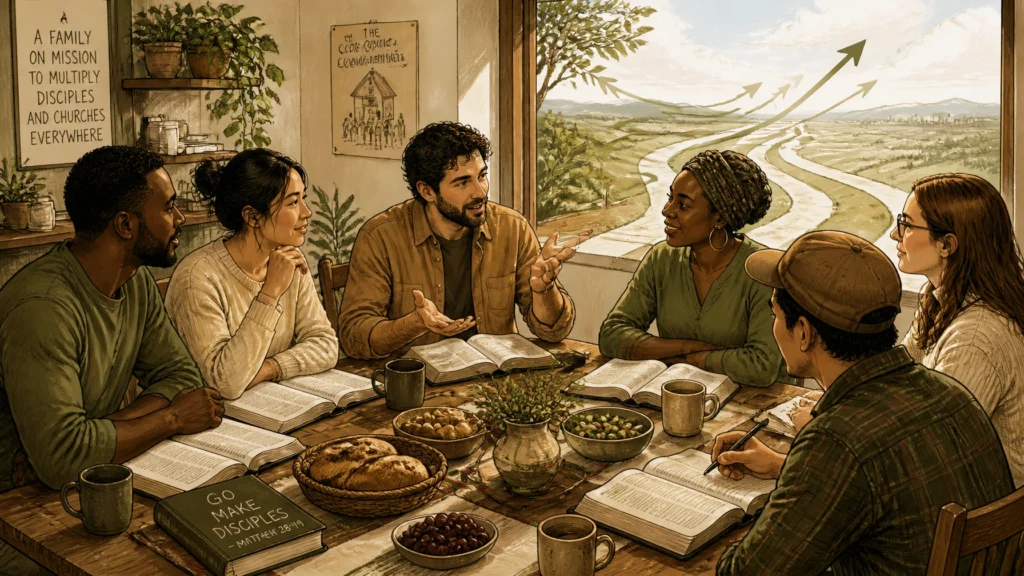
Jesus did not build His mission around one gifted leader serving an ever-growing crowd. He formed disciple-makers, sent them into everyday relationships, and entrusted the next generation to their faithfulness.
In Matthew 28:18–20 (NIV), Jesus commands His followers to “go and make disciples of all nations.” The strategy is relational, reproductive, and generational.
The question for your church is not only, “How many people attend?”
It is also:
- Who is becoming a disciple-maker?
- Who is apprenticing the next leader?
- Which groups are starting new groups?
- Which churches are planting churches that can reproduce without the original pastor?
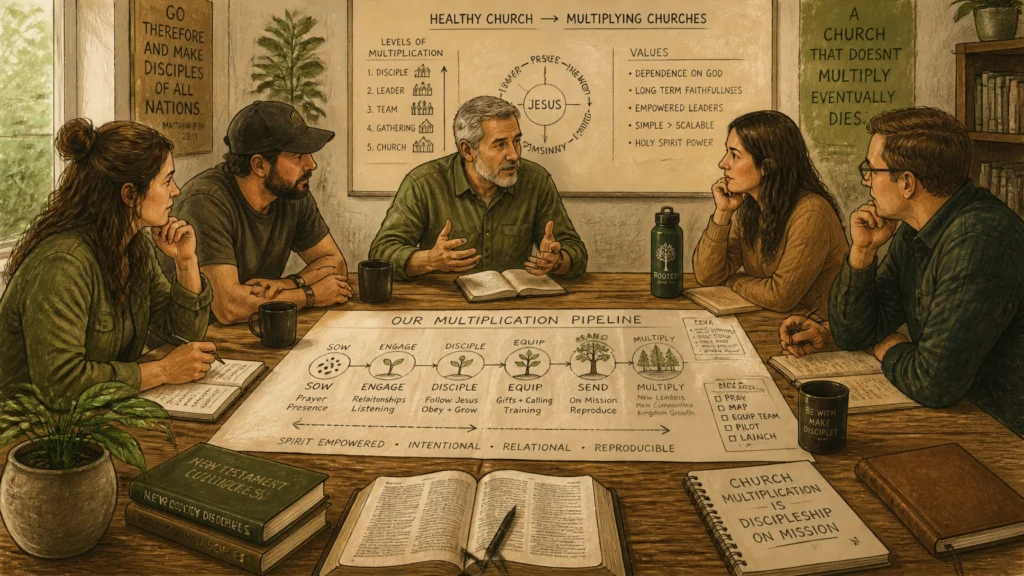
This is the bridge between disciple making movements and a practical church multiplication strategy.
The Ripple Effect: From One Life to Transformed Communities
Every movement begins with a person encountering Jesus.
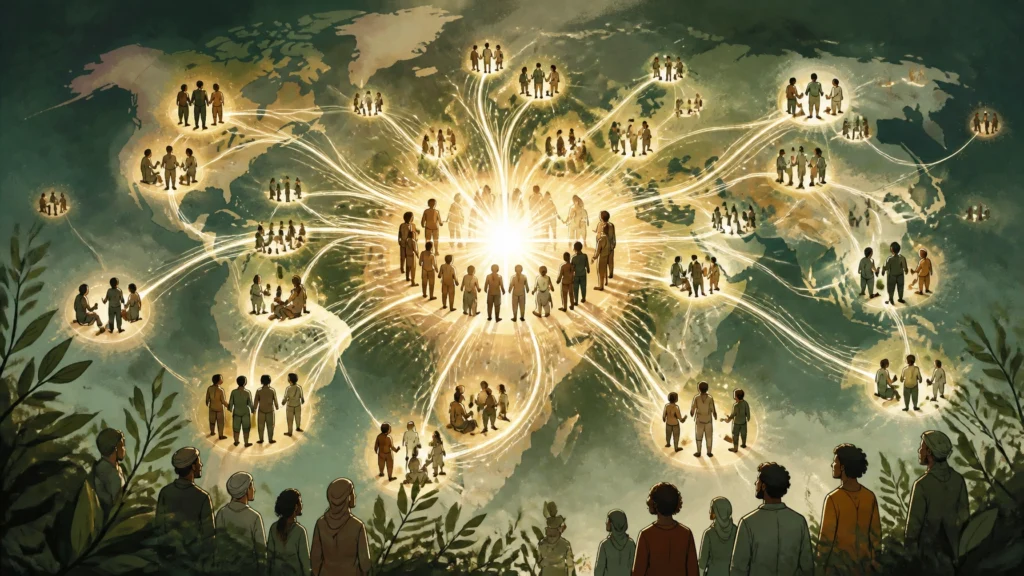
At Family Network, we describe this journey as the Ripple Effect:
- Individuals encounter the Real Jesus.
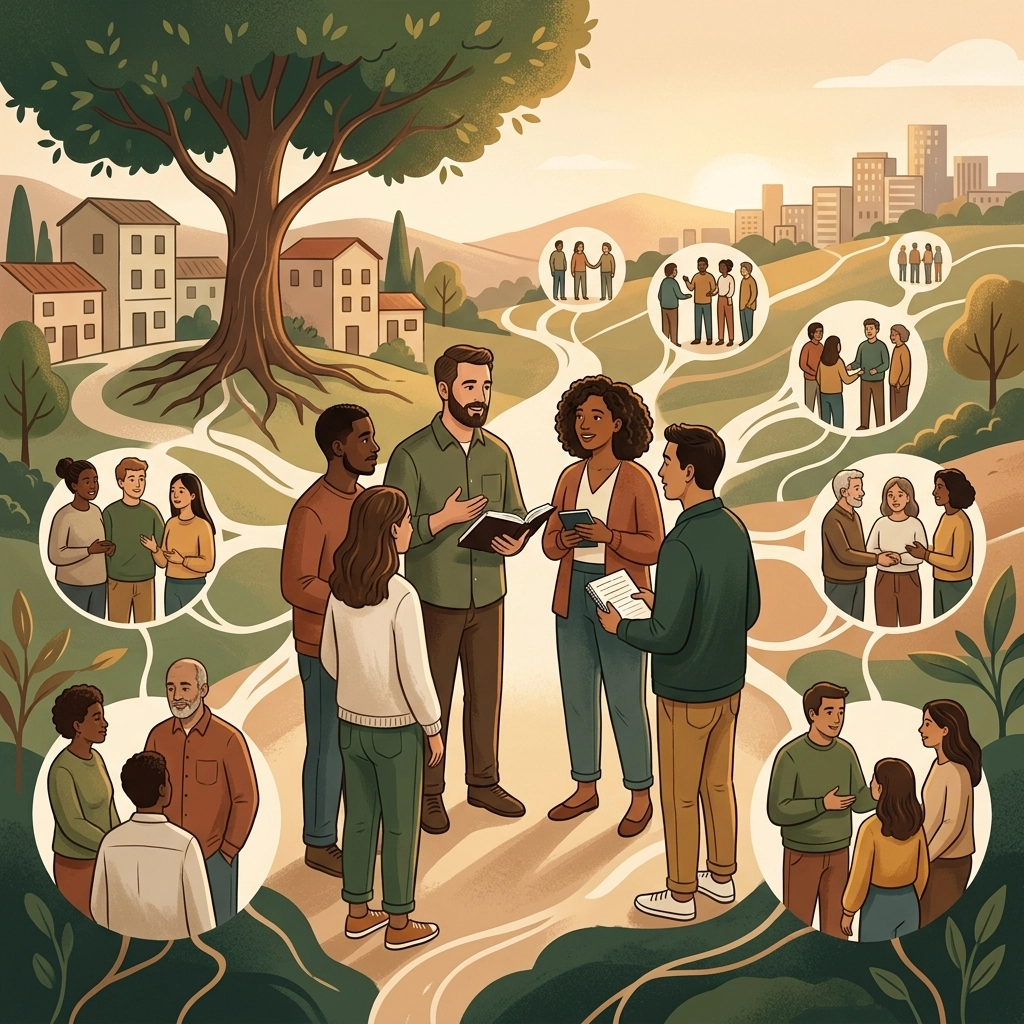
- Disciple-makers multiply in coffee shops, homes, workplaces, and boardrooms.
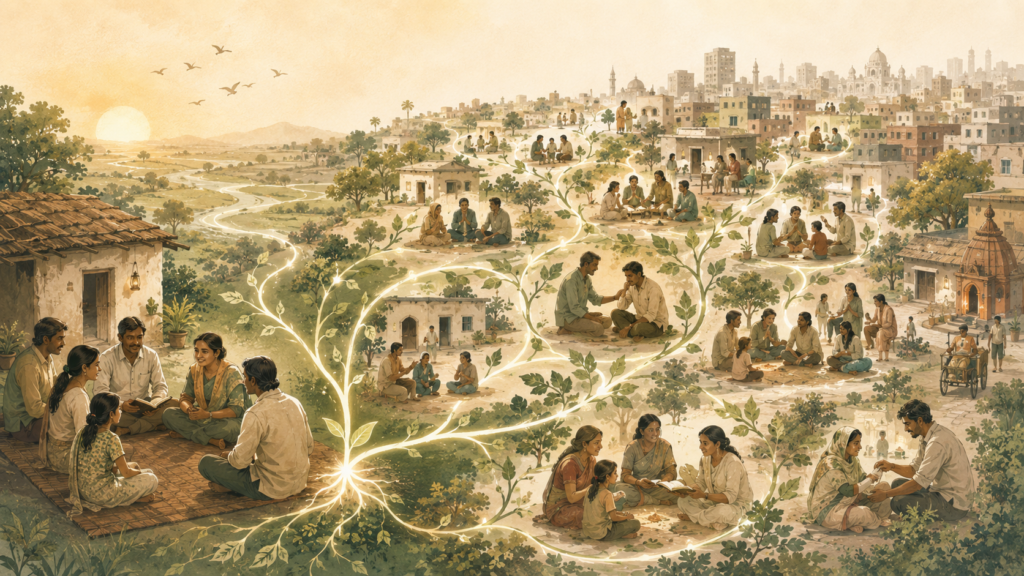
- Transformed communities and generations emerge.
The first ripple is personal. Someone meets Jesus, hears His Word, and begins responding in obedience.
The second ripple is relational. That person begins helping someone else follow Jesus.
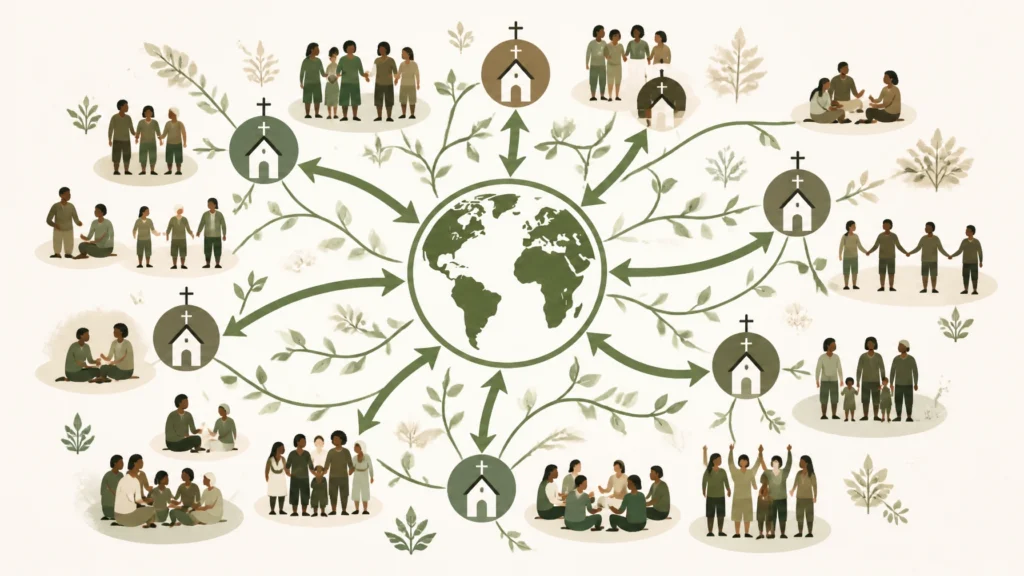
The third ripple becomes communal. Groups form, leaders emerge, churches are planted, and entire communities experience the presence and mission of Christ.
This vision is central to The Real Jesus: Volume 1, The Path to Purpose (Disciple-making Series, Book 1). Jesus does not merely invite people to admire Him. He calls them to follow Him into a life of purpose, obedience, and mission.
In The Real Jesus: Volume 2, The Power of Presence (Disciple-making Series, Book 2), we are reminded that multiplication is not manufactured through human effort alone. The Holy Spirit empowers the Church to carry the presence of Jesus into new places and new generations.
More than 200 regular people are currently engaged in disciple-making relationships through Family Network.
That is where multiplication begins: ordinary people learning to follow Jesus and helping others do the same.

Why Addition-Based Church Growth Strategies Stall
Attendance, giving, and participation are important indicators. But they do not tell the whole story.
Family Network’s Disciple-Making Reproduction Rate resource observes that many churches have a reproduction rate below 5%, with some below 1%. By contrast, multiplying movements in other parts of the world have experienced reproduction rates exceeding 100% in a year.
The issue is not that churches are failing to work hard.
The issue is that many churches are measuring the wrong outcome.
Addition asks, “How many people can we gather?”
Multiplication asks, “How many disciple-makers can we release?”
Addition builds around centralized programs.
Multiplication creates reproducible pathways.
Addition depends on the pastor.
Multiplication develops leaders who can reproduce without the pastor.
A healthy church multiplication strategy does not ignore Sunday gatherings. It ensures that gatherings serve a larger mission: forming and sending disciples who make disciples.
The Five Lanes of Multiplication
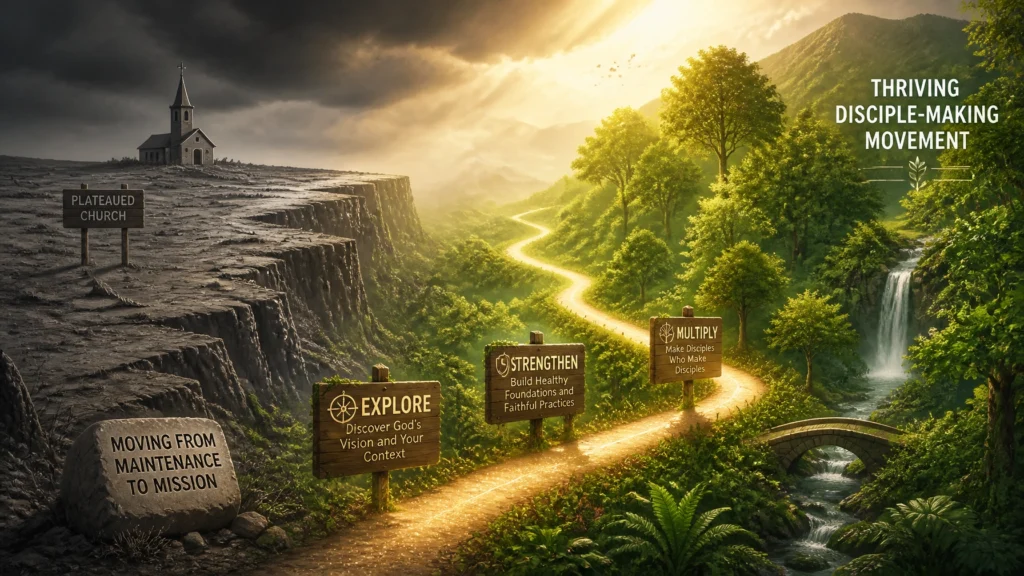
A church does not move from a Sunday service directly to a global movement. It travels through a pathway of increasing alignment, capacity, and shared mission.
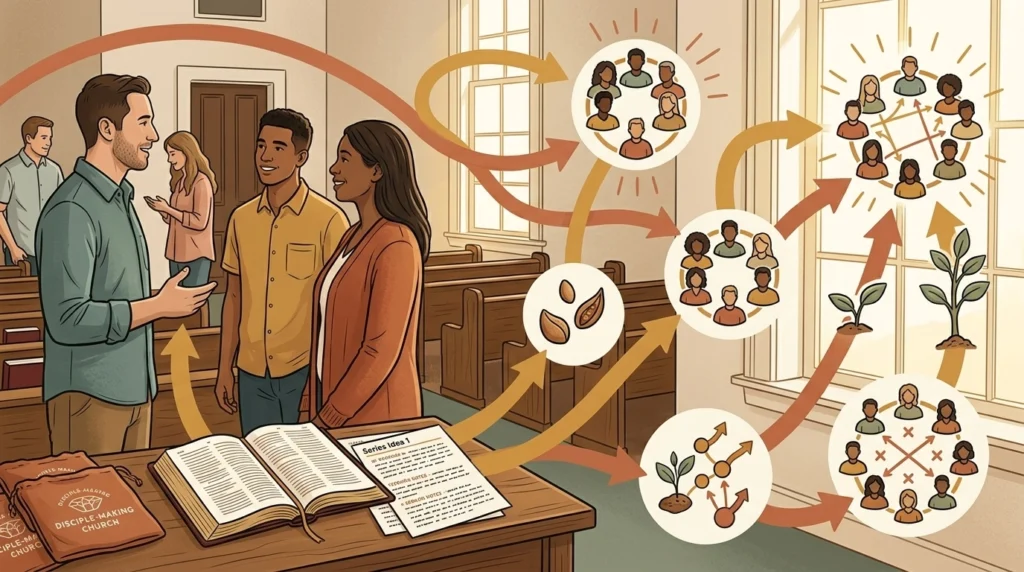
Family Network’s five lanes provide a practical framework:
1. Explore
This is where leaders and churches encounter a fresh vision for disciple-making and multiplication.
You may begin with a conference, a conversation, or a personal conviction that your church must move from maintenance to mission.
Key questions include:
- What is Jesus inviting us to change?
- What does a disciple look like in our context?
- Where are our current systems helping or hindering reproduction?
2. Multiply
Here, a core team begins practicing reproducible disciple-making.
Leaders meet in homes, coffee shops, workplaces, and ministry environments. They use simple tools, open Scripture, ask good questions, and practice obedience together.
The goal is not to create another complex program.
The goal is to establish a disciple-making culture that ordinary people can carry.
✔ Simple enough for a new believer to understand
✔ Relational enough to build trust
✔ Reproducible enough to move beyond the original leader
3. Strengthen
Multiplication requires more than enthusiasm. It requires healthy leadership, shared systems, theological clarity, and consistent coaching.
This is where your church strengthens:
- Its leadership development pipeline
- Its ministry practices and resources
- Its coaching rhythms
- Its children’s, worship, and community systems
- Its ability to care for people across multiple locations
Strong systems should support the movement, not control it.
4. Partner
No church should have to pursue multiplication alone.
Partnership creates strategic alignment between churches, leaders, coaches, and ministry networks. Churches share lessons, resources, prayer, and sending capacity while remaining responsive to their own communities.
The goal is not uniformity.
The goal is unity around the shared mission of making disciples and planting reproducing churches.
5. Integrate
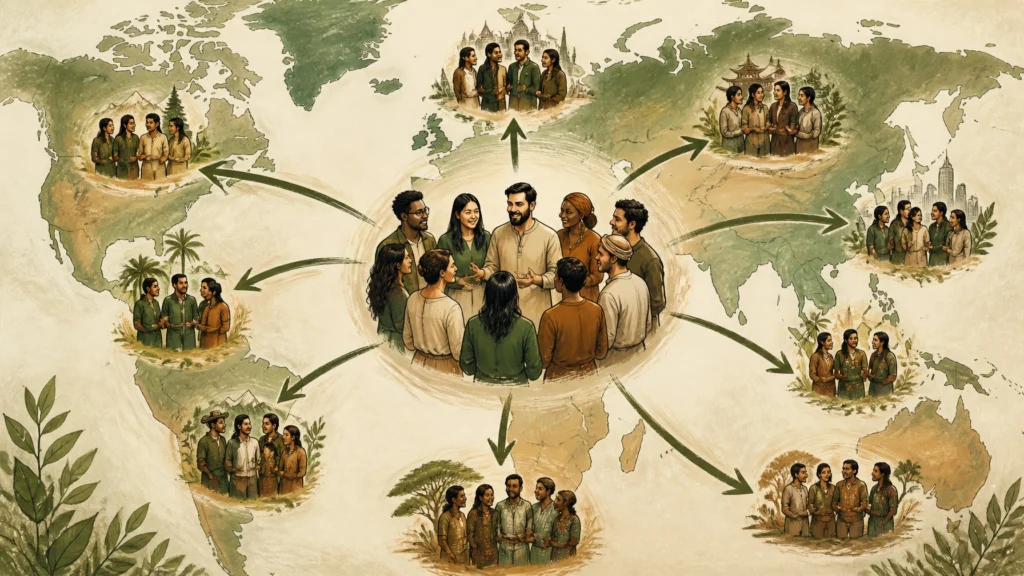
As churches multiply across locations, integration becomes essential.
A multisite or multi-location church needs more than a common name. It needs shared identity, aligned leadership, consistent values, clear communication, and systems that serve every campus well.
Integration may include:
- A common disciple-making framework
- Shared teaching and ministry resources
- Aligned leadership expectations
- Consistent financial and legal structures
- Coaching for campus pastors and team leaders
- Local flexibility within a unified mission
One church in multiple locations should feel connected without becoming unnecessarily centralized.
The Family Network levels of engagement describe this movement from initial participation to deeper partnership and full integration.

Build an Apprenticeship Pipeline Before You Need It
Church multiplication rises or falls on leadership development.
If every new group, campus, or church requires the senior pastor to personally lead it, multiplication will eventually stall.
A practical apprenticeship pipeline can change that.
Stage 1: Identify
Look for people who demonstrate spiritual hunger, relational influence, humility, and a willingness to obey Jesus.
Do not look only for polished speakers.
Look for faithful followers.
Stage 2: Invite
Invite potential leaders into a specific relationship with you or another mature leader.
Explain the opportunity clearly: “I want to help you learn to help others follow Jesus.”
Stage 3: Model
Let the apprentice watch you lead a conversation, facilitate Scripture engagement, coach a volunteer, resolve conflict, or plan a new outreach.
Leadership is transferred through proximity.
Stage 4: Practice
Give the apprentice real responsibility.
Let them lead the Bible discussion, organize the group, make the follow-up call, or facilitate the team meeting while you remain present.
Stage 5: Coach
After each experience, ask:
- What went well?
- What did you notice?
- Where did you see God at work?
- What would you do differently next time?
- Who will you apprentice next?
Stage 6: Release
The goal is not to keep an apprentice close forever.
The goal is to release a leader who can make disciples, develop another apprentice, and eventually help plant a church.

Measure Reproduction, Not Just Activity
You get more of what you measure.
Attendance can tell you how many people gathered. Reproduction metrics tell you whether the mission is advancing through generations.
Consider tracking:
- Apprentices: How many emerging leaders are actively being developed?
- Generations: How many disciples are making disciples into the second, third, and fourth generations?
- Groups started from groups: How many new groups have emerged from existing groups?
- New leaders released: How many leaders can lead and reproduce without the pastor?
- Churches planted: How many new churches or campuses have been launched?
- Churches that reproduce: How many of those new churches are planting or launching others?
- Disciple-Making Reproduction Rate: How many new disciples are being reached compared with the average worshiping community?
The most revealing question may be this:
If your pastor stepped away for six months, would the disciple-making movement continue?
If the answer is no, your church may have activity, but it does not yet have enough reproduction.
Your Next Faithful Step
You do not need to redesign your entire church this week.
Start with one honest conversation.
Gather two or three trusted leaders and ask:
- Where are people currently making disciples in our church?
- Who is apprenticing the next generation of leaders?
- What would we need to simplify so that multiplication becomes possible?
- What is one group, leader, or neighborhood we could help reproduce this year?
Then choose one next faithful step.
You might begin a coaching relationship. You might identify your first apprentices. You might map your leadership pipeline. You might invite your team to explore the Strategic Vision Map. Or you might simply begin praying together for the people God is preparing.
Family Network is here to walk alongside you, not to impose a formula, but to help you discover how a disciple-making culture can take root in your church and context.
The mission is larger than one church.
The opportunity is greater than one generation.
Churches that make disciples can plant churches. And churches that plant churches can help catalyze a movement that reaches communities, cities, and nations.
If you would like to start a conversation, contact Family Network. No pressure. Just partnership around the next faithful step.
High-Impact Social Media Clip
The future of the Church isn’t addition. It’s multiplication.
A growing attendance list is not the same as a multiplying movement. The real question is: Who is making disciples, developing leaders, starting new groups, and planting churches that can reproduce without the original pastor?
Discover the bridge from disciple-making movements to churches that plant churches: Read the full post.
#ChurchMultiplication #ChurchPlanting #DiscipleMaking #ChurchLeadershipDevelopment #ChurchCoaching #DiscipleMakingCulture