Part 2 of the November Family Discipleship Series
By Dr. Adam Grill
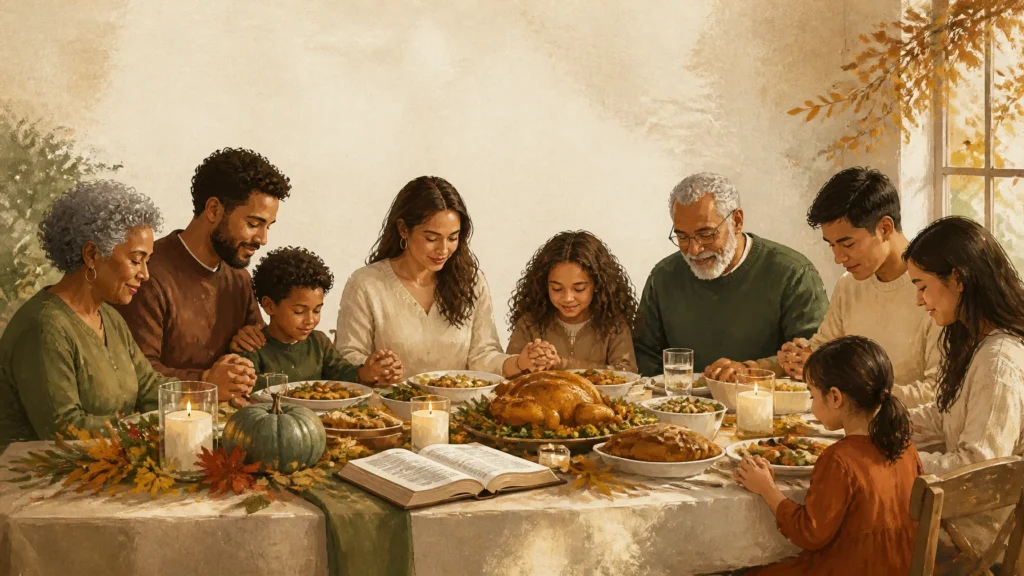
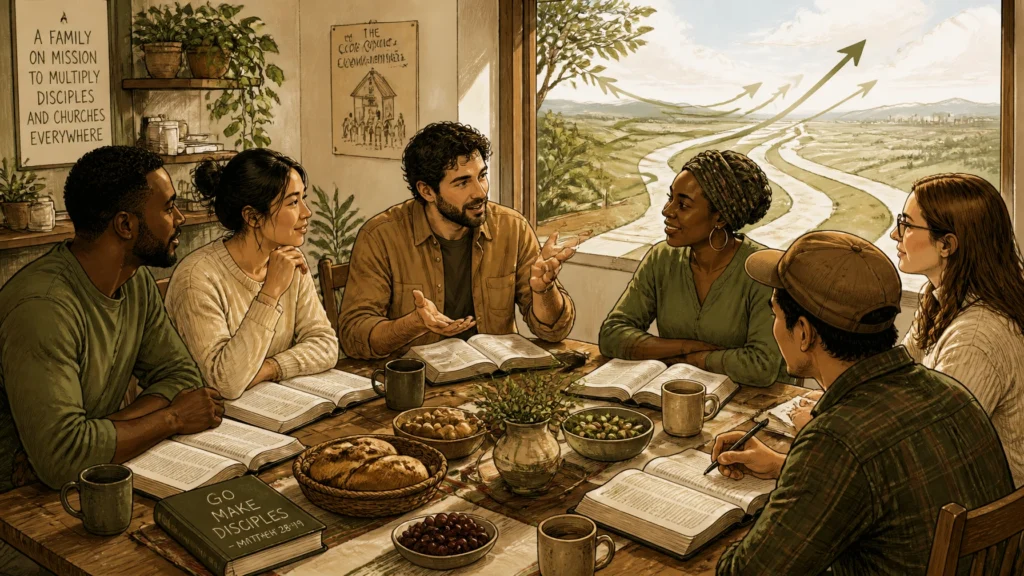
The holidays give your family something priceless: unhurried space around a table.
People come through your front door carrying more than gifts. They bring questions, memories, disappointments, hopes, and sometimes a quiet sense of disconnection from church and faith.
What if your holiday gatherings became more than well-prepared events?
What if your home became a simple, welcoming space where people could listen, tell stories, encounter Scripture, pray freely, and experience the love of Jesus without pressure?
The future of family discipleship may be closer than you think.
It may be sitting at your table.
Explore: See Your Home as a Place of Mission
In The Real Jesus: Disciple-making Series, Book 1, we see that Jesus made disciples through intentional relationships and everyday moments. He taught in homes, around meals, along roads, and in the ordinary spaces where people lived their lives.
Jesus did not separate spiritual formation from real life.
He brought the kingdom of God into conversations, friendships, meals, and shared experiences.
That matters during the holidays because hospitality is not simply entertaining people. Hospitality is making room for people to be known.
The NIV says, “Practice hospitality” (Romans 12:13). Hebrews 13:2 expands that invitation: “Do not forget to show hospitality to strangers.”
Hospitality is not reserved for people who already believe, behave, or belong.
It is one way your family can embody the welcome of Jesus.
Deuteronomy 6:6–7 also gives us a picture of faith formation happening in the rhythm of home life: “Talk about them when you sit at home and when you walk along the road, when you lie down and when you get up” (NIV).
The home is not merely where discipleship happens after church activities are finished.
The home is one of the primary places where faith becomes visible, practiced, and passed on.
Multiply: Turn Familiar Traditions into Intentional Practices
You do not need to create a complicated holiday ministry program.
You need to recognize the discipleship opportunities already present in your family traditions.
A meal can become a listening space.
A recipe can become a storytelling bridge.
A guest list can become a mission field.
A short prayer can become an invitation to trust God.
The goal is not to make every moment spiritualized or formal. The goal is to create small, repeatable practices that help your family notice God and love people well.

1. Make the Table a Place of Listening
Before you plan what you will say, decide how you will listen.
Many guests feel pressure during the holidays to appear happy, grateful, and connected. A thoughtful question can give someone permission to be honest.
Try asking:
- “What has this year been like for you?”
- “What is one thing you are grateful for?”
- “What has been difficult lately?”
- “What are you hoping for in the coming year?”
- “Where have you experienced unexpected kindness?”
Do not rush to correct, preach, or solve.
Listening is not a strategy for getting someone to agree with you. It is an act of love.
When your children see you listen patiently to a relative, neighbor, or guest, they are learning that people matter because they bear the image of God.
2. Let Stories Carry the Message
Holiday gatherings naturally create opportunities to remember.
Use them.
Invite family members to share a short story about God’s faithfulness, a difficult season, a meaningful tradition, or a person who made a difference in their lives.
Keep the invitation open and uncomplicated:
“Would anyone like to share a moment from this year when you felt encouraged, helped, or reminded of hope?”
Children can participate, too. Ask them to tell the story of a favorite family tradition or explain why a particular decoration matters.
You might even create a simple “story bowl” with questions such as:
- “What is a family memory that still makes you laugh?”
- “Who taught you something important about kindness?”
- “When have you seen someone welcome you?”
- “What does hope mean to you this season?”
Stories make faith personal without making the gathering performative.
In The Real Jesus: Disciple-making Series, Book 2, the emphasis on developing disciples through relational investment reminds us that people are formed through life-on-life connection. Your testimony does not need to be polished to be powerful.
It needs to be honest.
3. Read a Short Passage of Scripture
Scripture does not need to be presented as a lecture.
Choose a short passage that connects naturally with the gathering. Read it slowly, then ask one simple question.
For example:
- Luke 2:1–20: What stands out to you about the people who first heard the news of Jesus’ birth?
- Matthew 5:14–16: Where can our family bring light to others?
- Psalm 23: Which word or phrase gives you comfort?
- Luke 10:25–37: What does it look like to love our neighbor?
Use the NIV and allow people to respond in their own words.
You are not trying to control the conversation.
You are creating space for people to encounter the living Word of God together.
4. Pray with Permission, Not Pressure
Prayer can be one of the most natural ways to bring a gathering toward Jesus, but only when it is offered with humility.
You might say:
“Before we eat, would it be okay if I offered a short prayer of gratitude?”
Or:
“Is there anything anyone would like us to pray about this week?”
Give people permission to pass.
Do not single out guests or assume that everyone shares your beliefs. Do not use prayer to make a public point about someone’s life.
A short, sincere prayer can be enough:
“Jesus, thank You for this food, this home, and the people around this table. Help us receive one another with patience and love. Bring peace to those carrying burdens this season. Amen.”
Prayer should feel like an open door, not a test.
Strengthen: Follow a Simple Holiday Hospitality Plan
Purpose does not require complexity. Use this simple before, during, and after plan.
Before: Prepare the Space and Your Heart
✔ Invite someone who may feel isolated, overlooked, or disconnected from church.
✔ Ask about food allergies, mobility needs, cultural preferences, and scheduling concerns.
✔ Briefly explain the gathering to your children so they know how to welcome guests.
✔ Choose one Scripture passage and one conversation question.
✔ Decide in advance how you will protect the gathering from political arguments, family conflict, or excessive activity.
✔ Pray for the people who will enter your home, not that they will perform faith, but that they will experience genuine love.
During: Welcome, Listen, Share, and Bless
✔ Greet each guest personally and help them feel expected.
✔ Give children simple hospitality roles: welcoming at the door, serving food, writing cards, or helping younger guests.
✔ Ask questions that invite stories rather than debates.
✔ Share a short Scripture passage or family testimony.
✔ Offer prayer without pressure.
✔ Watch for the person sitting quietly or standing at the edges of the conversation.
✔ Keep the gathering flexible enough for laughter, silence, grief, and unexpected interruptions.

After: Continue the Relationship
✔ Send a thank-you message within a few days.
✔ Follow up on something the guest shared.
✔ Invite them into another ordinary moment: a walk, coffee, a meal, or a neighborhood activity.
✔ Ask your children: “Who seemed encouraged? What did we learn about them? How could we keep caring for them?”
✔ Celebrate obedience, not outcomes.
The goal is not to count how many people prayed a certain prayer or attended your gathering.
The goal is to love people faithfully and help your family grow into a community that welcomes, listens, and goes.
Protect the Welcome from Pressure and Performance
Christian hospitality loses its beauty when people feel managed.
Your family does not need to create a perfect faith experience. You do not need a spotless home, an impressive meal, or a dramatic testimony.
Keep these safeguards in place:
- Never use food or friendship as leverage for religious participation.
- Let guests decline prayer, Scripture reading, or conversation.
- Avoid turning personal stories into public teaching moments.
- Do not force children to perform spiritual roles.
- Make room for grief and complicated family histories.
- Keep confidentiality when someone shares something vulnerable.
- Prioritize safety, especially when welcoming people your family does not know well.
- Remember that relationship is not a transaction.
A disciple-making culture grows through trust.
The speed of trust matters more than the speed of your program.
Integrate: Create a Family Ripple Effect
A holiday meal may seem small.
But disciple-making movements are often built through small, reproducible acts of obedience.
One family welcomes a neighbor.
A child learns to notice who is alone.
A guest experiences Christian community without judgment.
A conversation continues over coffee.
A Scripture passage is remembered weeks later.
A person who was welcomed begins welcoming someone else.
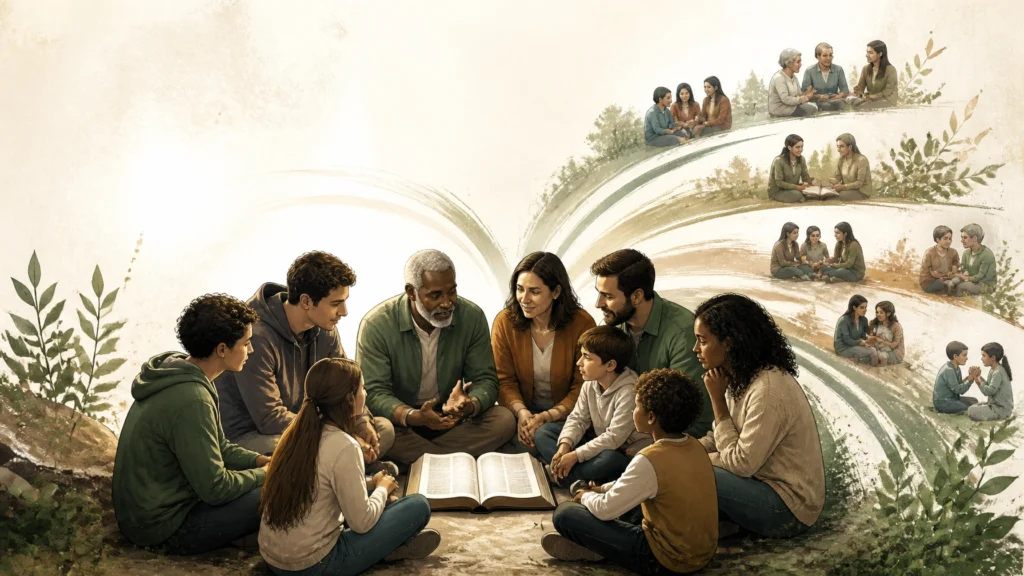
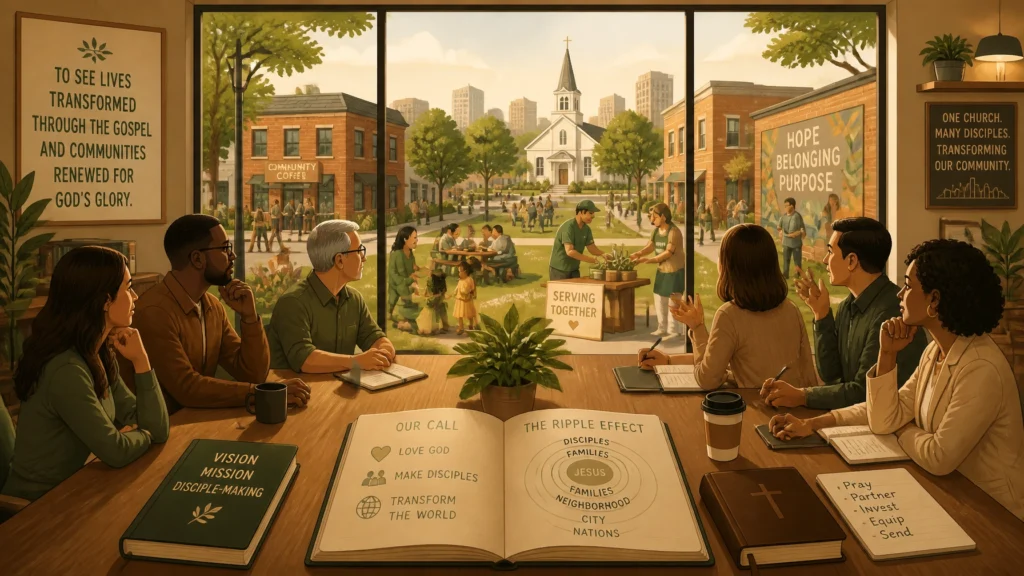
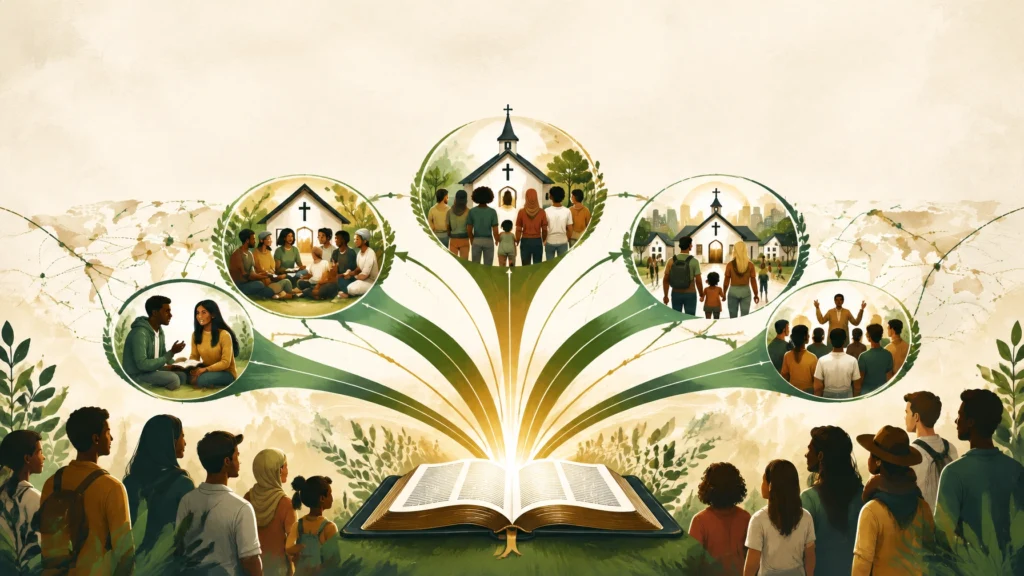
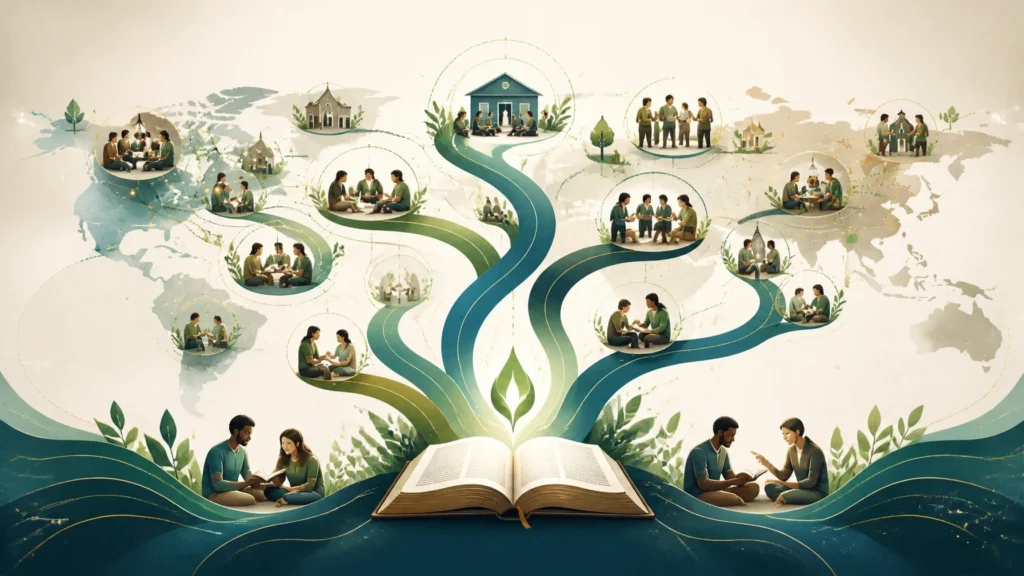
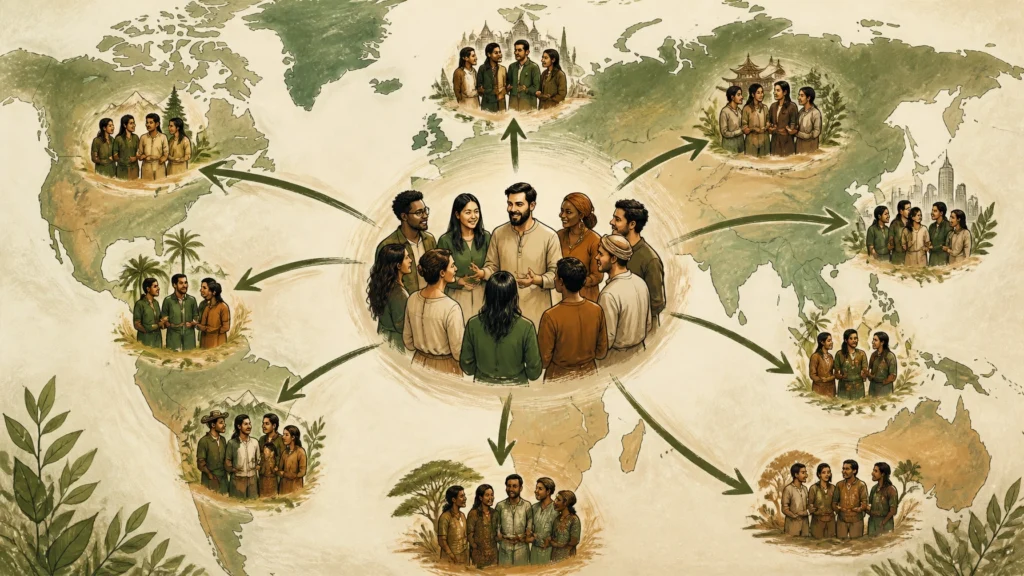
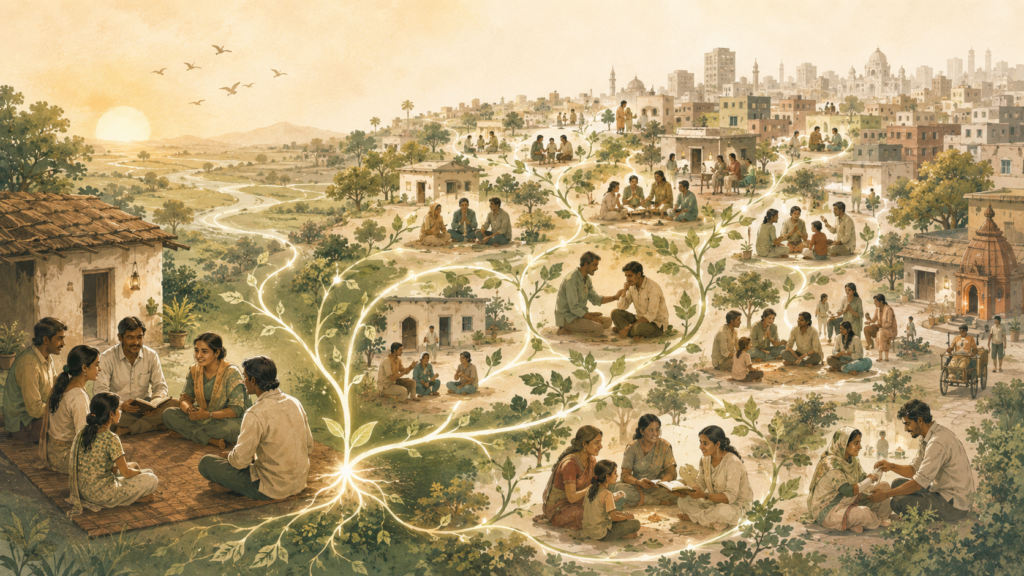
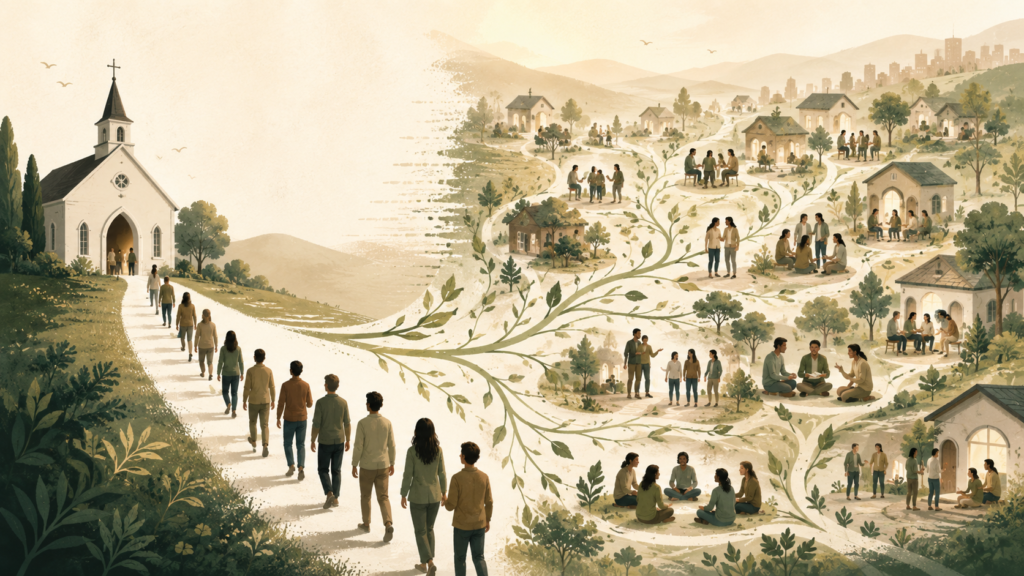
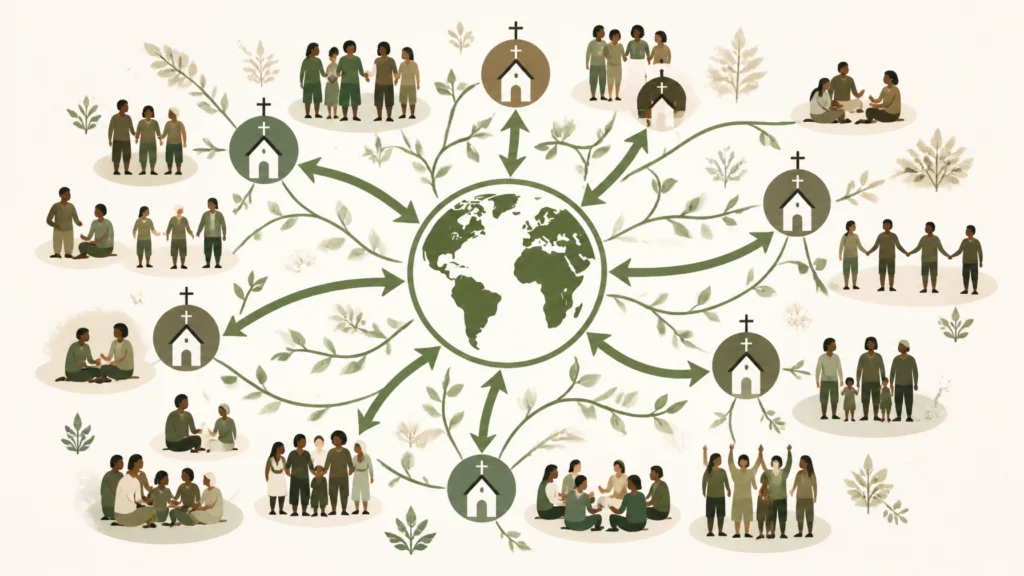
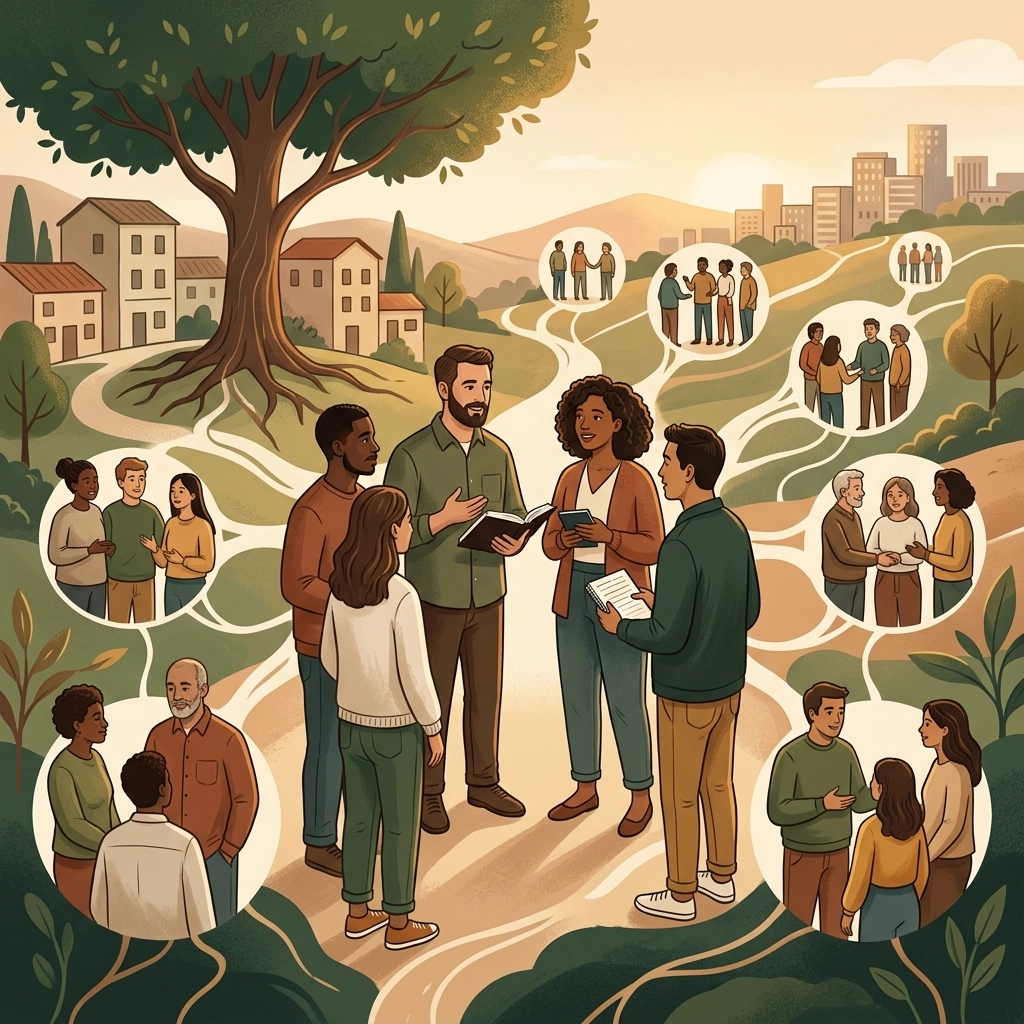
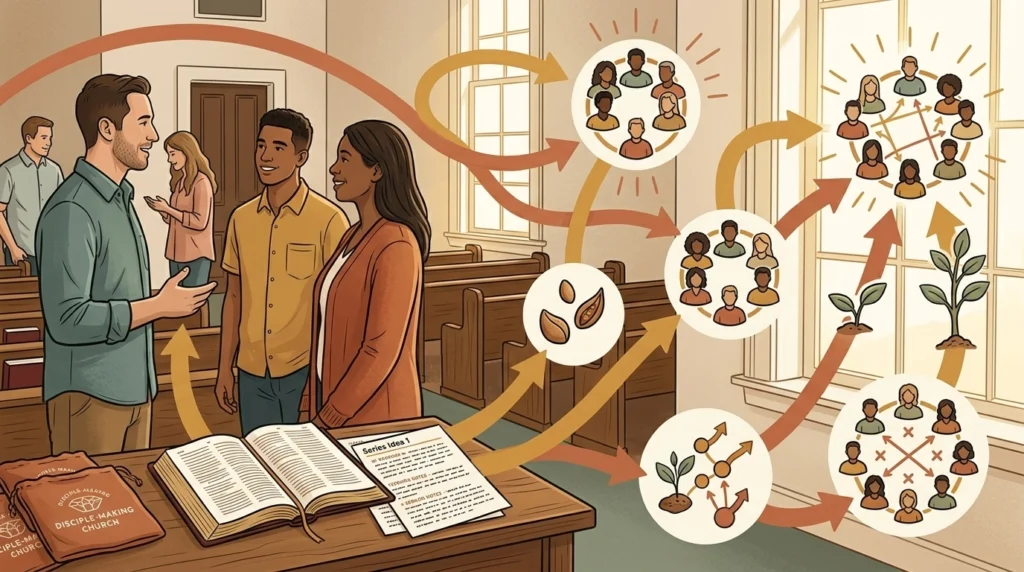
This is the Family Network Ripple Effect: individuals encounter the real Jesus, disciple-makers multiply in everyday spaces, and communities and generations are transformed.
Addition gathers more people around an event.
Multiplication equips people to carry love, truth, and the presence of Jesus into their own relationships.
Your home can become part of that movement.
Not because every gathering will be dramatic.
Because faithful hospitality is reproducible.
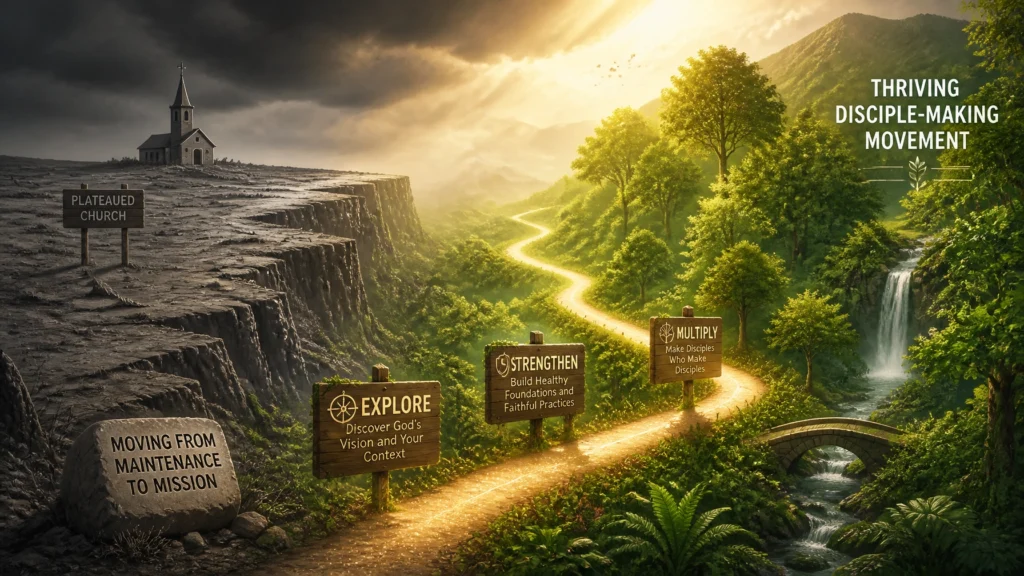
At Family Network, we believe churches become disciple-making churches when ordinary people are equipped to live the mission where they live, work, and play. You can explore more about this vision through our guide to disciple-making movements and the proven framework for moving from maintenance to mission.
Start simply this holiday season:
✔ Invite one person who may feel disconnected.
✔ Ask one question and listen without rushing.
✔ Read one short passage of Scripture.
✔ Offer one sincere prayer.
✔ Follow up with one act of care.
More than a meal, your table can become a place where people discover welcome, families practice obedience, and the good news begins to move from one relationship to another.
You do not have to host perfectly.
You only have to make room.
High-Impact Social Media Clip
Caption:
Your holiday table can be more than a place to eat.
It can become a space for listening, storytelling, Scripture, prayer, and genuine welcome: especially for neighbors and relatives who feel disconnected from church.
You do not need a perfect meal or a polished spiritual presentation. Start with one invitation, one honest question, and one open door.
Hospitality is not performance.
It is love made visible.
Read the full post through the Family Network blog.
#FamilyDiscipleship #HolidayHospitality #DiscipleMaking #FamilyNetwork #TheRippleEffect #ChurchLeadership #GreatCommission